How to Care for Wood, Stainless Steel, and Titanium Cutting Boards
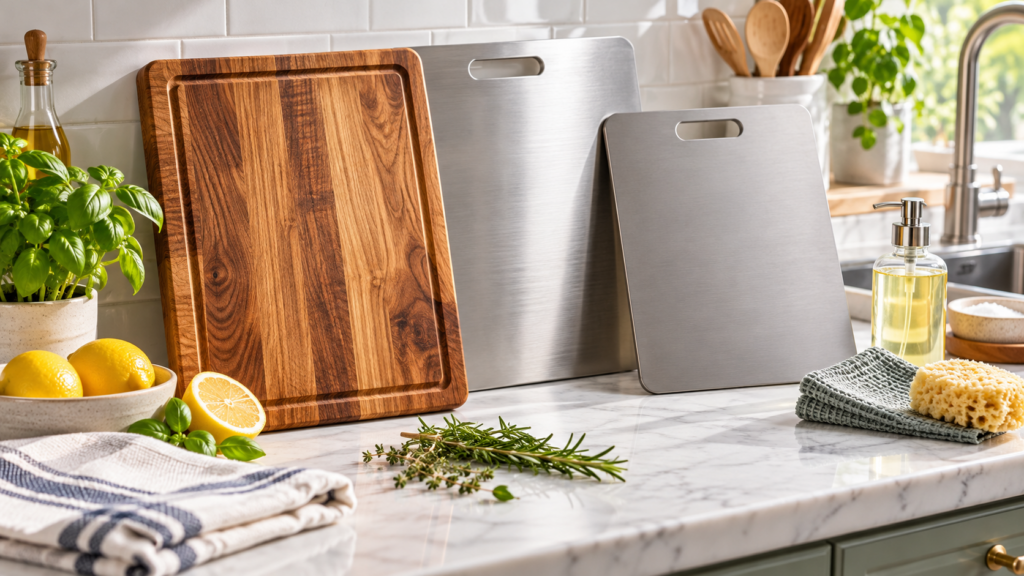
How to Care for Wood, Stainless Steel, and Titanium Cutting Boards
Choosing a cutting board is only half the story.
Once you find a board that fits the way you cook, the next question is pretty simple:
How do I take care of this thing?
Wood, stainless steel, and titanium cutting boards can all give you a useful prep surface, but they don’t necessarily want to be cleaned and maintained the same way.
The good news? Cutting-board care doesn’t have to become another kitchen project.
Here’s what to know.
Start With the Rule That Applies to Every Cutting Board
No matter what your board is made from, start clean and clean it again after use.
The USDA recommends washing cutting boards with hot, soapy water after preparing food, rinsing them, and allowing them to dry. It also recommends keeping raw meat, poultry, and seafood separate from foods such as produce or bread when possible to reduce cross-contamination. Food Safety and Inspection Service
And don’t wait forever to retire a damaged board. Boards that become excessively worn or develop grooves that are difficult to clean should be replaced. Food Safety and Inspection Service
Beyond those basics, the material starts to matter.
Caring for a Wood Cutting Board
Wood has a warm look, feels good under a knife, and can last a long time when it is cared for properly.
The biggest enemy of a wood board is prolonged moisture.
Wash the board soon after using it with warm or hot soapy water, rinse it, and dry it rather than leaving it sitting in a sink full of water.
Pay particular attention to laminated or glued wood boards. USDA guidance notes that laminated boards can crack or split in the dishwasher, so always follow the board maker’s instructions before putting a wood board through a dishwasher cycle. Food Safety and Inspection Service
Once the board is clean, allow air to circulate around it while it finishes drying instead of leaving a damp side pressed flat against the counter.
Many unfinished wood and bamboo boards also benefit from occasional conditioning with a food-safe oil recommended for cutting boards. That helps keep the wood from becoming overly dry.
And remember: your cutting board does not need to smell like tonight’s onions forever. If odors remain after normal washing, consult the board manufacturer before experimenting with strong cleaners or abrasive treatments.
Caring for a Stainless Steel Cutting Board
Stainless steel is considerably less demanding.
Because it is a nonporous surface, it does not need oiling or conditioning. Normally, soap and water are enough for everyday cleanup.
Wash the surface, rinse it well, and dry it to help prevent water spots.
If your stainless board has silicone corners, feet, handles, or another attached material, check its care instructions before assuming the entire board can go into the dishwasher.
Also avoid attacking the surface with extremely abrasive scrubbers just because it’s metal. Scratches may not make the board unusable, but they can affect its appearance.
Stainless steel will show fingerprints, water marks, and the evidence that someone actually cooked dinner. That’s normal. A soft cloth after washing can help restore the cleaner-looking finish.
Caring for a Titanium Cutting Board
Titanium boards are another relatively low-maintenance option.
They don’t require the oiling or conditioning associated with wood, and their nonporous metal surface is designed for straightforward cleaning.
For everyday use, wash with dish soap and water, rinse, and dry.
If your titanium board is sold as dishwasher safe, follow the manufacturer’s instructions for dishwasher cleaning.
That brings us to the partner option for this article.
CookwareTalk Partner Option
Interested in comparing a pure-titanium cutting board?
Titan Haus currently describes its cutting board as Grade 1 pure titanium and says the board is dishwasher safe. The company also publishes independent-material testing information for its product. Those are manufacturer claims and specifications, so readers should review the current product details and policies before purchasing.
CookwareTalk may earn a commission if you purchase through this partner link, at no additional cost to you.
[View the Titan Haus Titanium Cutting Board]
Should You Sanitize a Cutting Board?
Cleaning and sanitizing are not quite the same thing.
Cleaning removes food residue and debris. Sanitizing is an additional step intended to reduce microorganisms.
The USDA says cutting boards can be sanitized after cleaning using a food-contact-safe sanitizer. Its home solution is 1 tablespoon of unscented liquid chlorine bleach in 1 gallon of water, followed by rinsing and drying. Commercial sanitizers should specifically be labeled for food-contact surfaces and used according to their instructions. Food Safety and Inspection Service
You don’t need to turn normal dinner cleanup into a laboratory procedure, but extra attention makes sense after preparing raw meat, poultry, seafood, or other foods that raise cross-contamination concerns.
One Board or More Than One?
You certainly can own one cutting board and clean it thoroughly between jobs.
But there is also a practical argument for having more than one.
USDA recommends considering a separate board for raw meat, poultry, and seafood and another for produce, bread, and foods that will not receive further cooking. Food Safety and Inspection Service
That is less about having a fancy cutting-board collection and more about making cross-contamination harder to do accidentally.
The Best Care Routine Is the One You’ll Actually Use
A cutting board doesn’t need a complicated maintenance ritual.
Wood needs a little more attention to moisture and conditioning.
Stainless steel mainly needs cleaning and drying.
Titanium is designed to be relatively simple to wash and maintain.
Whichever one fits your kitchen, the important part is keeping it clean, letting it dry properly, following the manufacturer’s instructions, and recognizing when a worn board has reached the end of its useful life.
And if you haven’t figured out which material fits your kitchen yet, that’s what our 5-question CookwareTalk Cutting Board Quiz is for.
Leave a Reply