Baking Pan Conversion Chart: Easy Substitutions for Common Pan Sizes
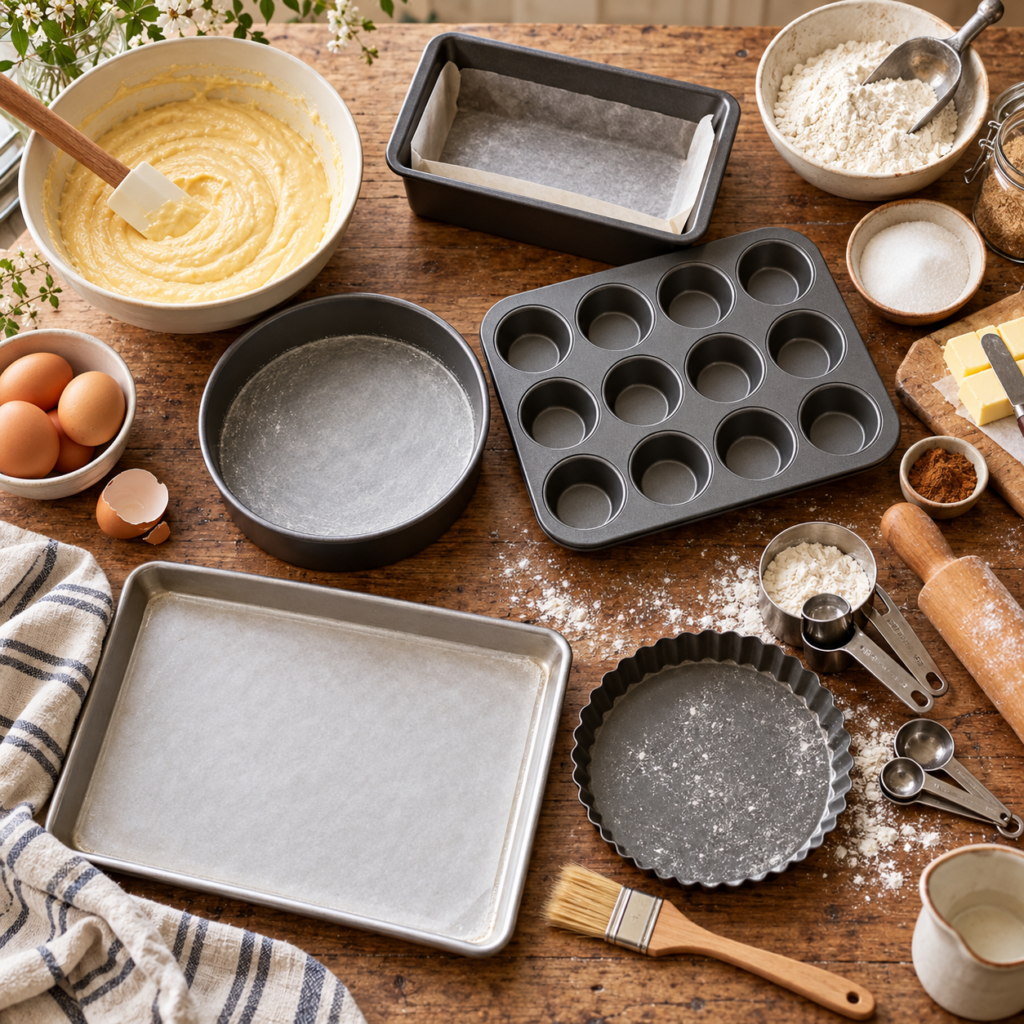
Ever start a recipe only to discover that you don’t have the baking pan it calls for? Before changing your plans or buying another pan, check the Baking Pan Conversion Chart below ↓ to find out whether a pan you already have in your kitchen might work.
And if you’d rather skip the math, try our FREE Pan Swaps Calculator →.
Baking Pan Conversion Chart
This quick-reference chart compares common baking pans by the area across their bottoms.
| Baking pan | Bottom area (sq. in.) | Similar-size alternative |
|---|---|---|
| 8-inch round | 50.3 | No exact common match; adjust batter if needed |
| 8 × 8-inch square | 64 | 9-inch round |
| 9-inch round | 63.6 | 8 × 8-inch square |
| 11 × 7-inch rectangle | 77 | 9 × 9-inch square, with a small difference |
| 9 × 9-inch square | 81 | 11 × 7-inch rectangle |
| 10-inch round | 78.5 | 9 × 9-inch square, with a small difference |
| 9 × 13-inch rectangle | 117 | Two 9-inch round pans, if appropriate for the recipe |
Important: These are bottom-area comparisons, not guarantees of equal batter capacity. Pan depth, shape, and recipe requirements matter.
How Do Baking Pan Conversions Work?
For a square or rectangular pan, multiply the length by the width.
For example:
8 × 8 = 64 square inches
For a round pan, the calculation uses the radius (half the diameter):
Area = 3.14 × radius × radius
A 9-inch round pan has an approximate bottom area of 63.6 square inches.
That’s why an 8-inch square pan and a 9-inch round pan are often good substitutes when they have similar depths.
But what happens when the sizes aren’t so close?
Example: Can You Replace a 9 × 13 Pan With a 9-Inch Round?
A 9 × 13-inch pan has 117 square inches of bottom area. One 9-inch round pan has only about 63.6.
That’s a substantial difference!
Putting the entire recipe into one round pan could leave you with too much batter, especially if the original recipe already fills its pan generously.
Two 9-inch round pans have a combined bottom area of approximately 127.2 square inches, making them a more reasonable alternative for many layer-cake recipes.
Just remember that the baking time and cake thickness may change.
Watch Out for Batter Overflow Risks
Pan substitutions aren’t only about whether the batter physically fits inside the pan.
Many cakes rise during baking, so they need room above the batter.
For many standard cake recipes, a useful general guideline is to fill the pan approximately halfway to two-thirds full, unless the recipe provides different instructions.
Here’s an example.
Suppose your original 9 × 13-inch pan would be about two-thirds full. If you poured the same amount of batter into a similarly deep 9-inch round pan, the estimated fill could exceed 100%.
That means the substitute pan is too small for the full batch.
Don’t fill it to the rim and hope for the best! Divide the batter among suitable pans or adjust the recipe quantity.
Also remember that a smaller pan may need more baking time, while a larger pan may produce a thinner cake that bakes more quickly.
Does Pan Material Matter?
Absolutely!
Metal, glass, and ceramic baking pans transfer heat differently. Dark-colored metal pans may brown edges more quickly, while glass and ceramic can heat and cool differently from metal.
When changing both the pan size and the material, follow your recipe’s recommendations and monitor doneness carefully.
For recipes that depend on a particular pan shape—such as certain cheesecakes, Bundt cakes, or rolled sponge cakes—a simple area comparison may not be enough.
Let Our Free Calculator Do the Comparing!
We’ve created a free interactive tool to help take the guesswork out of choosing a substitute baking pan.
Our CookwareTalk Pan Swaps Calculator lets you:
- Choose the pan specified in your recipe.
- Select the pan you have available.
- Compare their bottom areas.
- Estimate recipe quantity adjustments.
- See approximately how full your substitute pan might become.
- Receive a warning when your proposed substitution may lead to overfilling.
OPEN THE FREE PAN SWAPS CALCULATOR →
The next time you’re ready to bake and discover you’re missing the right pan, don’t give up on your recipe. Check the measurements, consider the pan depth, and see whether a simple substitution will work.
Happy baking from CookwareTalk!
References & Further Reading
For additional information about baking pan sizes and substitutions, explore these helpful resources from King Arthur Baking:
Leave a Reply