Stainless Steel vs. Ceramic Cookware: Which Is Better for Your Kitchen?
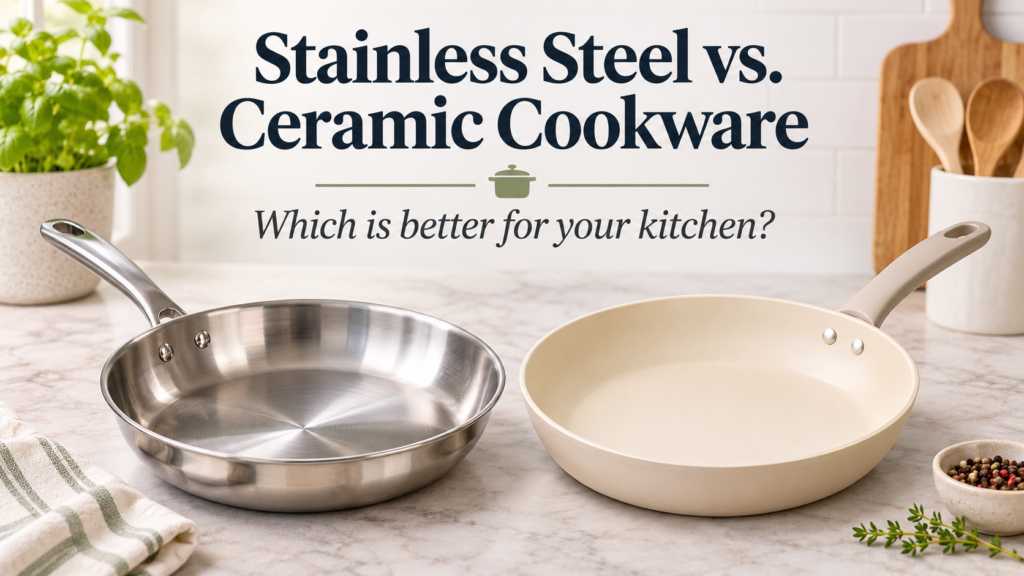
If you’re shopping for a new pan, stainless steel and ceramic-coated cookware can both look appealing, but they behave differently on the stove. Understanding their differences can help you choose what fits your cooking style.
In this comparison, ceramic cookware refers to ceramic-coated metal pans, not cookware made entirely from ceramic.
Stainless Steel Cookware: Pros and Cons
Stainless steel cookware is known for durability. Many quality pans have an aluminum or copper core to help distribute heat. Unlike coated nonstick pans, stainless steel doesn’t depend on a nonstick coating that gradually wears away.
It’s particularly useful for browning, searing, and preparing pan sauces. However, there’s a learning curve. Food can stick when the pan isn’t properly preheated or the cooking temperature isn’t managed carefully.
Ceramic-Coated Cookware: Pros and Cons
Ceramic-coated cookware usually has a metal body covered with a smooth, nonstick-style coating. It’s popular for cooking delicate foods, such as eggs, with relatively easy food release when the coating is in good condition.
But ceramic coatings can lose their nonstick performance over time. Overheating, abrasive cleaning, and rough utensils may accelerate wear. Those marks that look like scratches might be utensil transfer, stubborn residue, or actual coating damage.
Cleaning requirements also differ. Uncoated stainless steel generally tolerates more vigorous cleaning, while ceramic-coated pans benefit from gentle detergents, soft sponges, and careful storage.
Which Cookware Should You Choose?
Stainless steel may be the better long-term choice if durability, versatility, and browning performance matter most.
Ceramic-coated cookware may appeal to someone who prioritizes easier food release and doesn’t mind taking extra care of the coating.
Before purchasing either, consider your budget, cooking habits, stovetop compatibility, and the manufacturer’s care instructions.
The best cookware isn’t necessarily the most expensive or the most advertised. It’s the cookware that performs well for the meals you prepare and fits the way you actually cook.
Leave a Reply