Best Induction Cookware for Even Heat (2026)
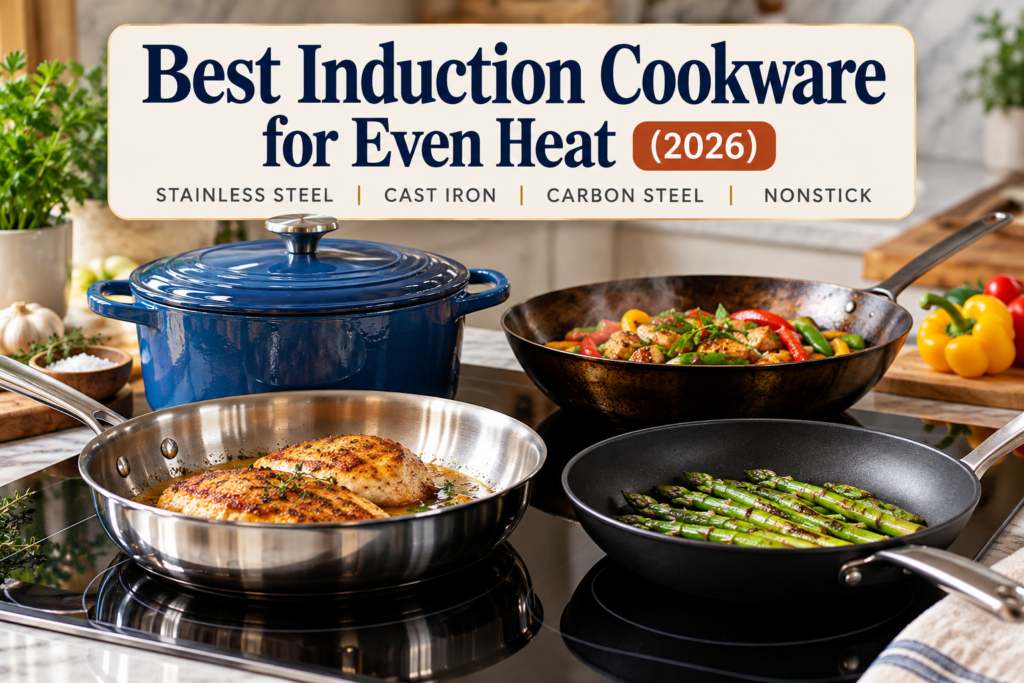
Best Induction Cookware: Quick Recommendations
The best induction cookware starts with a flat, magnetic base that matches the size of your cooktop’s cooking zone. Construction matters too: a well-made pan with a substantial base can help spread heat more evenly and respond predictably to changes in power.
There is no single cookware material that is best for every job. Fully clad stainless steel is a strong all-purpose choice, enameled cast iron excels at heat retention, carbon steel works well for high-heat cooking, and induction-compatible nonstick can be useful for delicate foods.
Rather than ranking cookware we have not personally tested, this guide compares the materials, construction styles, and features that are most useful when shopping for induction cookware.
| Cookware Type | Best For | Key Benefit on Induction |
|---|---|---|
| Fully Clad Stainless Steel | Everyday versatility | Can provide responsive, even heating when paired with an induction-compatible magnetic exterior. |
| Enameled Cast Iron | Soups, stews, braising, and searing | Excellent heat retention and naturally compatible with induction. |
| Carbon Steel | High-heat frying and browning | Magnetic, responsive, and can develop a relatively nonstick cooking surface when properly seasoned. |
| Induction-Compatible Nonstick | Eggs, fish, and delicate foods | Easy food release when the pan includes a magnetic induction-compatible base. |
When shopping for induction-compatible cookware, look for a flat bottom, an induction symbol or manufacturer statement confirming compatibility, and a base that closely matches the cooking zone you plan to use. Very thin cookware may be more prone to uneven heating or warping. Some cookware may also hum or buzz on induction, especially at higher power settings, and that sound is not necessarily a sign that something is wrong.
What Makes a Pan Work on an Induction Stove?
Induction cooktops use copper coils beneath the glass surface to create a changing magnetic field. When compatible cookware is placed over the cooking zone, that field induces electrical currents in the magnetic portion of the pan and generates heat directly in the cookware.
For induction to work, the cookware must contain enough ferromagnetic material in its base. This is why some stainless steel pans work beautifully on induction while others do not.
Cookware may use 18/10 or other 300-series stainless steel on the interior cooking surface while incorporating a different magnetic stainless steel layer or base underneath. That combination can provide the corrosion resistance of stainless steel along with induction compatibility.
| Metal Type | Induction Compatible? | What to Know |
|---|---|---|
| Cast Iron and Carbon Steel | Generally Yes | These iron-rich materials are naturally magnetic and usually work well on induction. |
| Magnetic Stainless Steel | Usually Yes | Many induction-ready pans use a magnetic stainless steel exterior or base. |
| 300-Series Stainless Steel such as 18/10 | Depends on Construction | 18/10 stainless by itself may be weakly magnetic or nonmagnetic, but it can be used in cookware that includes a separate magnetic induction-compatible layer. |
| Pure Aluminum and Copper | No, by themselves | These materials normally need a bonded magnetic base or layer to work on induction. |
A refrigerator magnet provides a quick compatibility test. Hold the magnet against the flat outer bottom of the pan. A strong attraction is a good sign that the cookware may work on induction. You can also look for the induction symbol on the cookware or check the manufacturer’s specifications.
Pan size matters too. Some cooktops will not recognize cookware if the magnetic portion of the base is too small for the selected cooking zone.
Fully Clad vs. Impact-Bonded Bases on Induction
Passing the magnet test tells you that a pan can interact with an induction burner, but cookware construction can also affect how heat moves through the pan.
Fully clad cookware typically bonds conductive material such as aluminum between layers of stainless steel across the bottom and up the sidewalls.
Impact-bonded or disc-bottom cookware concentrates its layered construction in the base of the pan. A well-made bonded base can perform very well on induction, particularly for boiling, steaming, and other cooking tasks where sidewall heat distribution is less important.
Neither construction automatically guarantees excellent or poor performance. Thickness, materials, manufacturing quality, pan size, and how closely the base matches the induction element can all affect results.
| Feature | Fully Clad Pans | Impact-Bonded Base Pans |
|---|---|---|
| Layered Construction | Usually extends from the bottom up the sidewalls | Concentrated mainly in the base |
| Sidewall Heating | Can distribute heat farther up the sides | Most heat distribution occurs through the bottom |
| Induction Compatibility | Works when the exterior or base is sufficiently magnetic | Works when the bonded base contains enough magnetic material |
| Best Fit | Useful for cooks wanting versatile, all-around heat distribution | Can be a practical choice for boiling, steaming, and everyday cooking |
How Induction Cookware Materials Compare
Different materials respond differently to heat. Thickness and construction matter just as much as the name of the material, so treat these comparisons as general guidelines rather than absolute rules.
| Cookware Material | Heating Response | Cooktop Considerations | Best Kitchen Use |
|---|---|---|---|
| Fully Clad Stainless Steel | Responsive; varies by core and thickness | Use an induction-compatible version with a smooth, flat magnetic base | Everyday searing, boiling, sautéing, and pan sauces |
| Enameled Cast Iron | Slower to change temperature but retains heat well | Heavy cookware should be lifted rather than dragged across the glass | Braising, slow-simmered stews, soups, and baking |
| Carbon Steel | Responsive, depending on thickness | Keep the base clean and lift rather than slide the pan | High-heat searing, stir-fries, browning, and crisping |
| Induction-Compatible Nonstick | Often responsive | Confirm that the base is magnetic and follow the coating manufacturer’s heat recommendations | Eggs, delicate fish, pancakes, and quick reheating |
Whatever material you choose, keep both the cookware base and the cooktop clean. Small particles trapped between a pan and the glass can contribute to scratches, especially if cookware is dragged rather than lifted.
Top Cookware Categories for Induction Cooking
Different cooking jobs call for different cookware. These three categories cover many everyday induction cooking needs.
1. Fully Clad Stainless Steel Sets
Induction-compatible multi-ply stainless steel is a versatile choice for sautéing, boiling, browning, and making pan sauces. Look for a flat magnetic exterior and construction substantial enough to remain stable during rapid temperature changes.
2. Enameled Cast Iron Dutch Ovens
Cast iron is naturally magnetic and works well with induction. Its high heat capacity makes it useful for braises, soups, stews, and other dishes that benefit from steady heat.
Because cast iron is heavy, set it down gently and lift it when moving it across a glass cooktop. Check the bottom of the cookware for rough areas before use.
3. Carbon Steel Skillets
Carbon steel combines magnetic compatibility with relatively responsive heating. It is well suited to searing, browning, stir-frying, and other high-heat techniques.
Choose a well-made pan with a flat base and follow the manufacturer’s recommendations for preheating and seasoning.
| Cookware Category | Best Kitchen Role | Key Induction Advantage |
|---|---|---|
| Fully Clad Stainless | Everyday sautéing, pan sauces, and boiling | Versatile construction with good heat distribution when properly designed for induction |
| Enameled Cast Iron | Braising, baking, and slow cooking | Excellent heat retention and natural magnetic compatibility |
| Carbon Steel | Searing, stir-fries, browning, and crisping | Magnetic material with responsive heating |
How to Fix Common Induction Cookware Problems
Even compatible cookware can sometimes hum, fail to register, heat unevenly, or leave marks on a glass cooktop. Here are some practical things to check.
| Problem | Possible Cause | What to Try |
|---|---|---|
| Buzzing or humming sound | Some cookware can vibrate or hum when interacting with the induction field, particularly at high power. | If cooking performance is normal, some sound may be expected. Try reducing the power setting. Check your cooktop manual if the sound is unusually loud or accompanied by an error. |
| Burner will not turn on | The cookware may not be magnetic enough, may be too small, or may not be centered correctly. | Test the base with a magnet, center the pan over the cooking zone, and use a pan that meets your cooktop’s minimum size requirements. |
| Scratched glass cooktop | Dragging cookware or moving a pan over grit or food particles can scratch the surface. | Keep the pan bottom and glass clean and dry, and lift cookware rather than sliding it. Follow your cooktop manufacturer’s care instructions. |
| Warped pan bottom | Extreme overheating or rapid temperature changes can contribute to warping. | Avoid heating an empty pan at maximum power unless the cookware manufacturer specifically recommends it. Let very hot cookware cool before exposing it to cold water. |
Induction can heat compatible cookware very quickly. Start with moderate settings until you learn how your particular cookware responds, and follow both the cookware manufacturer’s and cooktop manufacturer’s instructions.
Frequently Asked Questions About Induction Cookware
How do I test if my current cookware works on induction?
Hold a refrigerator magnet against the flat underside of the pan. If it sticks firmly, that is a good indication that the cookware contains enough magnetic material for induction. You can also look for the induction symbol or confirm compatibility with the cookware manufacturer.
Can you use cast iron on induction without scratching the glass?
Yes. Cast iron is generally induction compatible. Because it is heavy and some bases can be rough, keep both surfaces clean and lift the pan rather than sliding it across the cooktop. Follow the cooktop manufacturer’s care recommendations.
Does all stainless steel cookware work on induction stoves?
No. Induction requires a sufficiently magnetic base. Some stainless steel cookware is magnetic and some is not. A pan can also combine an 18/10 stainless steel cooking surface with a separate magnetic exterior or bonded base designed for induction.
Are induction converter interface discs worth using?
Converter or transfer discs can allow some non-magnetic cookware to be used on induction, but they may reduce the efficiency and responsiveness that make induction attractive. They can also become very hot. Some cooktop manufacturers do not recommend them, so check your appliance manual before using one.
Helpful Cookware Guides from CookwareTalk
If you are comparing cookware materials or learning how to get better results from stainless steel, these CookwareTalk guides can help.
| Guide | What It Covers | Why Read It |
|---|---|---|
| What Does 18/10 Stainless Steel Mean? | What 18/10, 18/8, and 18/0 stainless steel numbers actually describe. | Understand stainless steel composition before comparing cookware. |
| Why Food Sticks to Stainless Steel | Why food can stick and how preheating, temperature, and technique affect cooking. | Get better results once you start cooking with stainless steel. |
| Tomatoes, Acidic Foods, and Cookware Materials | How different cookware materials interact with acidic foods. | Choose cookware based on both the heat source and the foods you cook. |
Before replacing an entire cookware collection, test the pans you already own. A magnet, the induction symbol, and the manufacturer’s specifications can quickly tell you which pieces may already be ready for your induction cooktop.
Leave a Reply