Cutting Board Sliding on Your Counter? 4 Simple Fixes Before You Replace It
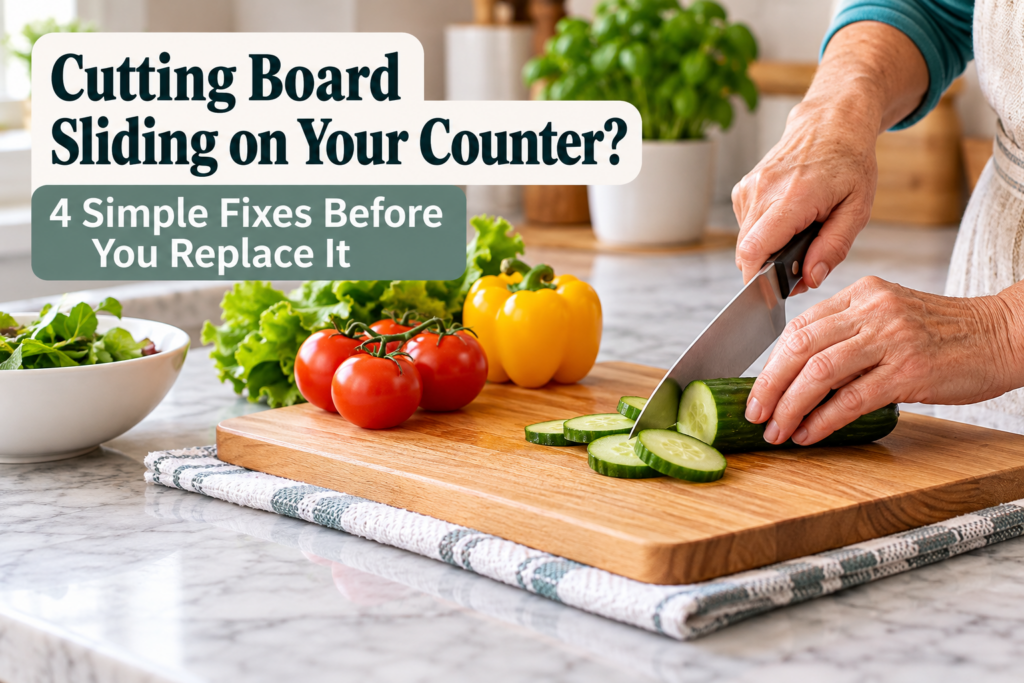
Ever tried chopping an onion or slicing vegetables, only to have your cutting board slide across the counter?
It’s annoying, but it’s also a safety concern. A board that moves unexpectedly can make it harder to control your knife.
The good news? You may not need a new cutting board. Before replacing yours, try these four simple fixes.
1. Put a Damp Towel Underneath
One of the easiest solutions may already be sitting in your kitchen.
Take a clean kitchen towel or paper towel, dampen it slightly, and wring out the extra water. Lay it flat on your countertop and place your cutting board on top.
The towel creates friction that can help prevent the board from sliding.
Quick tip: Use a damp towel, not a soaking-wet one. Make sure it lies flat without bunching up underneath the board.
2. Try a Non-Slip Mat
If your board moves frequently, consider placing a washable, non-slip kitchen mat underneath it.
A thin silicone or rubber gripping mat can help stabilize your cutting surface without permanently modifying your board.
Choose one that lies flat, stays in place, and is easy to clean.
3. Check the Board Itself
Sometimes the problem isn’t your countertop.
Look underneath your cutting board. Does it have rubber feet? Are any missing or worn down? Is the board warped or uneven?
A cutting board that rocks, wobbles, or refuses to sit flat may need replacing.
Before chopping, place it on the counter and gently test whether it moves.
4. Consider Size, Weight, and Handling
A lightweight board can be convenient to lift and wash, but it still needs to remain stable during food preparation.
A heavier board isn’t automatically better, either.
Think about how comfortably you can lift, carry, wash, and store the board. The ideal choice balances stability with ease of handling.
Remember: If your cutting board starts moving while you’re using a knife, stop and stabilize it before continuing.
A Quick Word About Cleaning
Whichever board you use, remember to clean it after preparing food.
The USDA recommends washing cutting boards with hot, soapy water after use, rinsing, and drying thoroughly. Using separate boards for raw meat and ready-to-eat foods can also help reduce cross-contamination.
For more guidance, read our Cutting Board Care Guide.
Is It Time for a Different Cutting Board?
If your current board is difficult to handle, uncomfortable to use, or no longer stable, it might be time to compare your options.
Wood, stainless steel, and titanium cutting boards have different characteristics, and the best fit depends on what matters most in your kitchen.
Not sure which one suits you?
Visit CookwareTalk.com and take our free five-question cutting-board quiz to discover your match!
Leave a Reply