How to Care for Cutting Boards: Wood, Plastic, Stainless Steel & Titanium
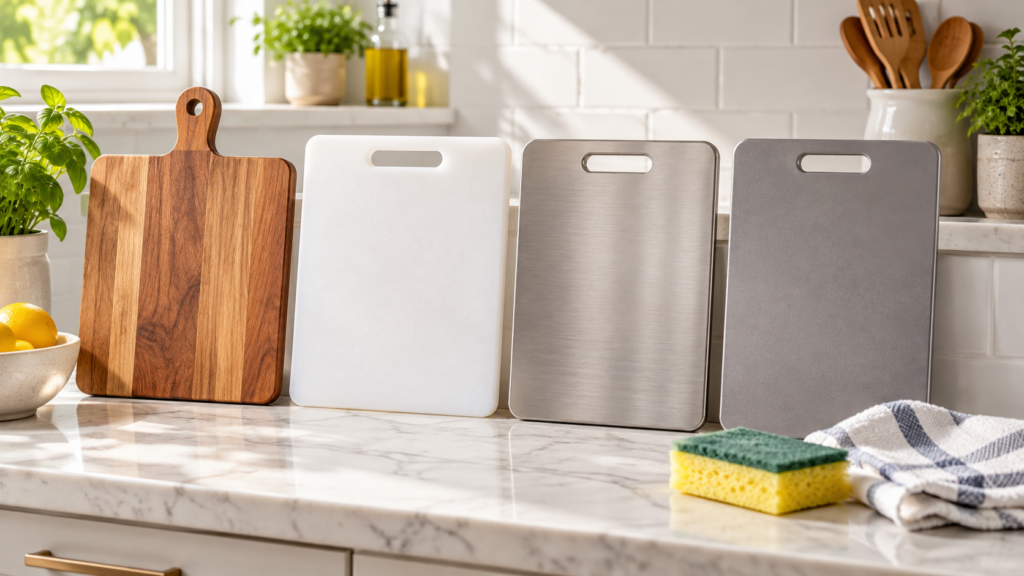
How to Care for Cutting Boards: Wood, Plastic, Stainless Steel & Titanium
A cutting board may seem like one of the simplest tools in your kitchen, but different materials need different kinds of care.
The cleaning routine that works perfectly well for a plastic board may shorten the life of a wooden one. Stainless steel and titanium are generally easy-care surfaces, but they still benefit from proper washing and drying.
The good news? None of this has to be complicated.
Here’s how to care for some of the most common cutting board materials—and a few things you’ll want to avoid.
Why Cutting Board Care Matters
Your cutting board comes into contact with vegetables, fruit, bread, meat, fish, herbs, and just about everything else you prepare.
Regular cleaning helps remove food residue and odors, while proper drying and storage can help prevent warping, staining, and unnecessary wear.
The most important rule is simple:
Wash it. Rinse it. Dry it well. Store it where air can circulate.
The details depend on what your board is made from.
How to Clean a Wood Cutting Board
Wood cutting boards need a little more attention than some other materials, but they can last for years when cared for properly.
After everyday use
Wash the board with warm water, dish soap, and a clean sponge or cloth.
Rinse it well, then dry the surface with a clean towel.
Afterward, allow the board to finish air-drying before putting it away.
What not to do
Avoid leaving a wooden cutting board soaking in the sink.
Too much water can cause wood to swell, crack, or warp over time.
Unless the manufacturer specifically says otherwise, wooden cutting boards should also stay out of the dishwasher. The combination of prolonged water exposure and high heat can be hard on natural wood.
Keep the wood conditioned
When a wooden board starts looking dry or dull, it may be time to condition it with a food-safe cutting board oil, such as food-grade mineral oil.
Follow the board manufacturer’s care instructions, since different wood products may have different recommendations.
Odors and stains
For lingering odors or minor discoloration, start with ordinary soap and water rather than aggressive cleaners.
A gentle baking-soda paste can sometimes help with stubborn odors, but always check the manufacturer’s instructions before trying stronger cleaning methods.
How to Clean a Plastic Cutting Board
Plastic boards are popular because they’re lightweight, inexpensive, and generally easy to maintain.
Wash your plastic cutting board after each use with warm water and dish soap.
Many plastic cutting boards are dishwasher-safe, but check the manufacturer’s instructions first. Heat can warp some thinner boards.
Watch those knife grooves
Plastic gradually develops scratches and grooves from repeated cutting.
Those marks don’t automatically mean you have to throw the board away. But once a board becomes heavily worn, deeply grooved, warped, or difficult to clean thoroughly, replacement may make more sense.
Stains and odors
Plastic can sometimes hold onto the color or smell of strongly colored foods.
Wash stains promptly rather than allowing food residue to sit on the board.
For stubborn discoloration, use only cleaning methods appropriate for that particular board.
How to Clean a Stainless Steel Cutting Board
Stainless steel cutting boards require very little special maintenance.
For everyday cleaning:
- Wash with warm water and dish soap.
- Rinse thoroughly.
- Dry with a soft towel.
Drying the surface instead of simply letting water sit on it can help reduce water spots.
Some stainless steel boards may be dishwasher-safe, but check the manufacturer’s directions before putting yours in the dishwasher.
Avoid overly abrasive cleaning
Heavy scouring pads and harsh abrasive cleaners aren’t usually necessary for everyday cleaning and may leave scratches or change the board’s finish.
A soft sponge or cloth is normally enough.
And because stainless steel can react poorly to prolonged exposure to certain strong chlorine-containing cleaners, don’t assume that stronger automatically means cleaner.
How to Clean a Titanium Cutting Board
One reason titanium cutting boards have attracted attention is their relatively simple care.
For routine cleaning, you generally don’t need an elaborate process.
Wash the board with dish soap and warm water, rinse it, and dry it.
That’s it.
Check the manufacturer’s instructions before putting a titanium cutting board into the dishwasher because construction can vary from one product to another.
Also remember that products marketed as “titanium” aren’t necessarily constructed identically. Some may be solid titanium, while others may use titanium as part of a layered construction or surface treatment.
When in doubt, follow the care directions supplied with your particular board.
Don’t Forget the Edges and Handles
Whichever material you use, don’t clean only the center.
Food and moisture can collect around:
- handles
- grooves
- edges
- corners
- rubber feet
- textured surfaces
Give those areas some attention during normal washing.
A board that looks clean from the top may still have food residue tucked into a groove or along an edge.
Drying Your Cutting Board Matters Too
Washing is only half the job.
After cleaning, don’t put a wet cutting board immediately into a tightly packed cabinet.
Allow air to reach the surface so the board can dry completely.
For wooden boards in particular, standing the board on its edge while it dries can help air reach both sides.
Even nonporous boards benefit from being thoroughly dried before storage.
How Should You Store Cutting Boards?
Store boards somewhere clean and dry.
If possible, avoid stacking a damp board tightly underneath several others.
A cutting board rack or vertical organizer can make storage easier and allow airflow between boards.
If you have several boards, you might also designate different boards for different jobs.
For example, one might be used primarily for produce and another for raw meat or seafood.
When Should You Replace a Cutting Board?
Cutting boards don’t all have an expiration date.
Condition matters more than age.
Consider replacing a board when it becomes:
- badly warped
- cracked or split
- deeply grooved
- difficult to clean
- unstable on the counter
- damaged enough that continued use is inconvenient or unsafe
A solid board that can still be cleaned properly doesn’t need to be discarded simply because it’s old.
Which Cutting Board Is Easiest to Care For?
There isn’t one perfect material for every kitchen.
Wood feels traditional and can last a long time, but it needs hand washing and occasional conditioning.
Plastic is lightweight and convenient but may become heavily scored with use.
Stainless steel is simple to wash and doesn’t require oiling or conditioning.
Titanium also offers relatively straightforward everyday cleaning without the maintenance associated with natural wood.
Your best choice depends on what matters most to you: weight, feel, knife use, maintenance, durability, price, and how you normally prepare food.
If you’re comparing materials before buying your next board, you can also read our guide:
Wood vs. Stainless Steel vs. Titanium Cutting Boards: Which Fits Your Kitchen?
And if you’re wondering specifically about titanium and your knives:
Are Titanium Cutting Boards Bad for Knives? What Home Cooks Should Know
The Bottom Line
Cutting board care doesn’t need to turn into a kitchen science project.
A few simple habits go a long way:
Clean the board after use, don’t leave food sitting on it, dry it thoroughly, store it properly, and follow the manufacturer’s directions for your particular material.
Do that consistently and your cutting board will be much easier to live with—whether it’s wood, plastic, stainless steel, or titanium.
Want an easier way to remember all of this? Get our free Simple Cutting Board Care Guide with at-a-glance care instructions for wood, plastic, stainless steel, and titanium cutting boards.
Leave a Reply